Pregnancy Loss Education Training
Live Professional Training | November 2026
Good intentions matter. But good intentions alone don't prepare us for the moment a family loses their baby.
Pregnancy and infant loss can leave even experienced professionals wondering:
What do I say?
What should I offer?
How do I support this family without unintentionally causing more harm?
What happens after they leave the hospital, office, birth center, or my care?
The Evelyn James & Company Pregnancy Loss Education Training was created to help professionals move from wanting to provide compassionate care to having practical tools to actually provide it.
Taught through a Grief-Informed Perinatal Care lens, this live training explores what families may need during miscarriage, stillbirth, neonatal death, TFMR, and other pregnancy and infant loss experiences—and how grief can affect the entire family system, postpartum experience, relationships, identity, and the way families experience healthcare long after the immediate loss.

Training Details
Date: Thursday, November 5th and Friday, November 6th
Time: 9:30 am - 4:30 pm each day
Location: Mothers’ Milk Bank of the Western Great Lakes, 560 Bonnie Lane, Elk Grove Village, Illinois 60007
Early Registration: $997 for the first 10 registrants, $1497 after (payment plan available.)
Continuing Education: If you hold the PMH-C through PSI, you can submit our training info to them for CE consideration.
Pregnancy loss care is more than knowing the “right thing” to say.
The moments surrounding pregnancy and infant loss can stay with families for the rest of their lives.
Professionals may only have a few hours, or even a few minutes, to create an experience in which a family feels heard, informed, respected, included, and cared for.
That means good loss care requires more than compassion.
It requires education.
It requires options.
It requires communication.
It requires understanding how grief may affect the person in front of us, and recognizing that their partner, children, extended family, cultural identity, previous losses, mental health, postpartum body, and life outside of the room may all be part of that experience.
This is where grief-informed care changes the conversation.

What Does “Grief-Informed” Mean in Pregnancy Loss Care?
A grief-informed lens asks us to look beyond the immediate medical event and recognize the many layers of loss a family may be carrying.
The loss of a baby may also involve the loss of an expected pregnancy, birth experience, future, identity, sense of safety, trust in their body, imagined family structure, feeding experience, relationships, routines, plans, and milestones.
Our job is not to fix grief.
Our job is to recognize it, understand how it may be affecting the family, provide meaningful choices and compassionate support, and know when additional care or referral is needed.
The Pregnancy Loss Education Training helps professionals begin putting that lens into practice.

What You'll Learn
During this live professional training, we will explore:
Understanding pregnancy and infant loss and the unique nature of perinatal grief
How grief can affect the individual, partner, siblings, extended family, and family system
Compassionate communication and practical language for difficult conversations
What to say, and what to avoid saying, after a loss
Using the family's language and following their lead
Supporting informed decision-making without pressure
Providing meaningful options for memory-making and continuing bonds
Advocating for time, privacy, dignity, and family preferences
Supporting partners whose grief may look very different
Supporting siblings and helping parents communicate about death in developmentally responsive ways
Cultural, spiritual, and religious considerations in grief and loss
Postpartum recovery after pregnancy loss, including needs that continue after discharge
Understanding the additional complexity that may accompany TFMR
Long-term support, follow-up, resources, and appropriate referrals
Professional boundaries, emotional impact, debriefing, and caring for ourselves while doing this work
Applying a grief-informed lens to the care you already provide
The goal is to become more prepared to meet the family in front of you with compassion, curiosity, options, and practical support.
Who This Training Is For
This training is designed for professionals and students who support families anywhere within pregnancy, birth, postpartum, loss, grief, or family care.
That may include:
Nurses, doulas, midwives, physicians and advanced practice providers, therapists, social workers, lactation professionals, childbirth educators, chaplains, bereavement professionals, birth workers, mental health professionals, support-group facilitators, students, nonprofit professionals, and others serving perinatal families.
You do not need to work exclusively in bereavement care to benefit from this training.
In fact, one of the reasons this education matters is because pregnancy loss may enter your work when you least expect it.
Why Attend Live?
The live Pregnancy Loss Education Training gives us the opportunity to go deeper than information alone.
We can talk through real situations.
We can examine the language we use.
We can discuss difficult or uncomfortable scenarios.
We can practice responding when there isn't an obvious answer.
We can learn from professionals working in different areas of perinatal care.
And you can ask the questions that have stayed with you after a difficult patient, client, birth, loss, or family experience.
This is education designed to be used in real life, not simply completed and forgotten.

This Is Not About Becoming Perfect at Loss Care.
There is no perfect sentence that removes grief.
There is no checklist that can make losing a baby okay.
And there is no single way every family wants to be supported.
What we can do is become better prepared.
We can learn how to communicate with greater sensitivity.
We can offer more options.
We can ask better questions.
We can understand why something that seems small to us may carry enormous meaning for a family.
We can learn when to speak, when to advocate, when to offer resources, and when simply to stay present.
That is the work.
What You'll Leave With
You should leave this training with greater confidence in how to:
Recognize grief.
Start difficult conversations.
Support without fixing.
Offer meaningful choices.
Communicate more intentionally.
Include partners and family systems.
Advocate for individualized care.
Identify resources and next steps.
Respond when you don't know exactly what to say.
And bring a grief-informed lens back into your everyday work with perinatal families.
Your Educators
Vallen Webb
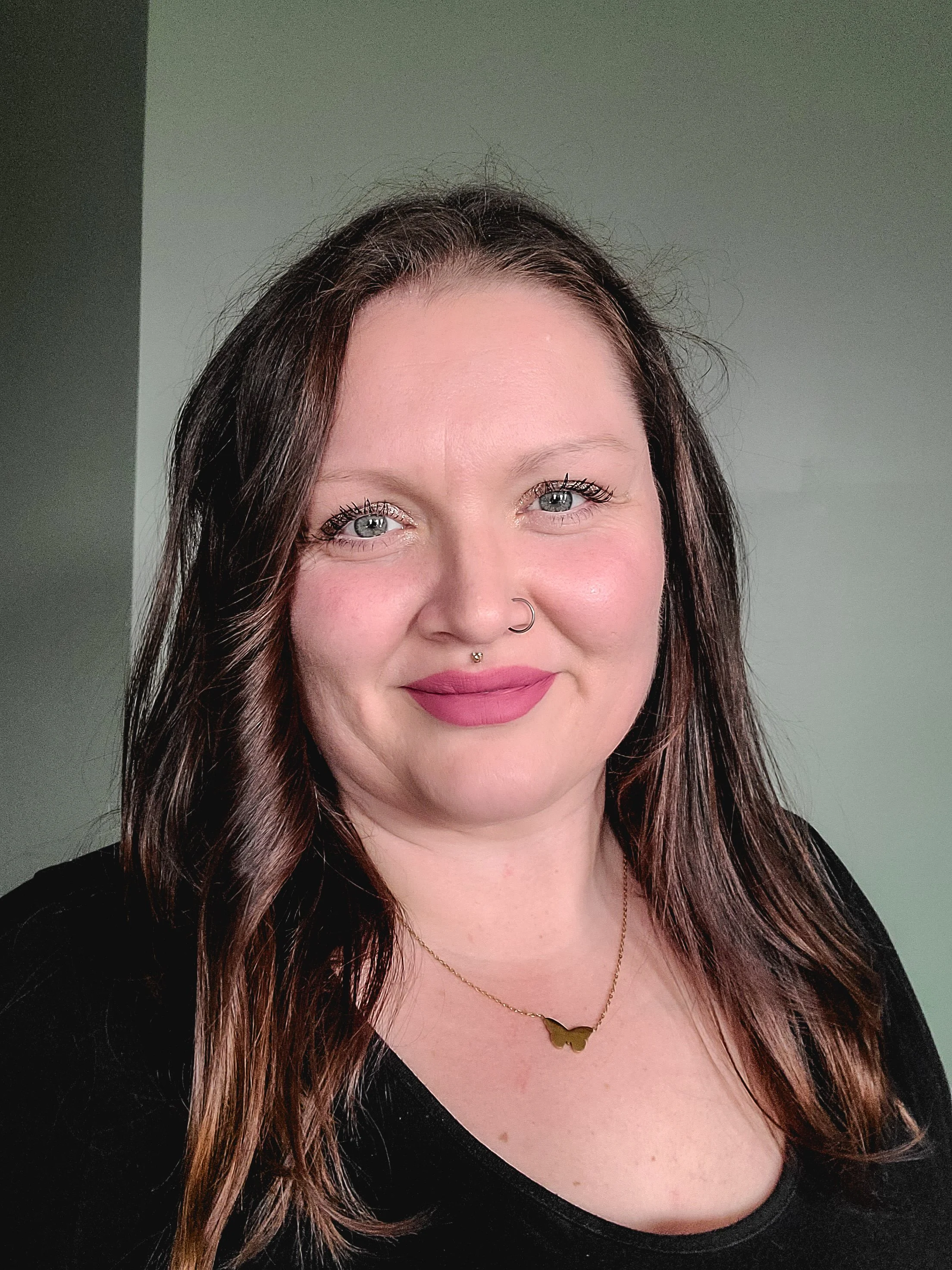
Vallen Webb is the Founder, CEO and Lead Educator of Evelyn James & Company. A Pregnancy Loss Educator, Postpartum and Bereavement Doula, and mother to Evelyn James, who was stillborn at 40 weeks and 5 days, Vallen combines lived experience with professional education to help improve the way families are supported through pregnancy and infant loss. Her work equips perinatal and healthcare professionals with practical, grief-informed tools for providing more compassionate, intentional, and family-centered care.
Education Director at Evelyn James and Co,
Full spectrum doula, Auntie, Chicago lover!
Leila Walker
Leila leads our wellness and educational activities as well as leading some of the lessons.
FAQs
-
No. This training is designed for professionals throughout the perinatal, medical, mental health, birth, grief, and family-support spaces.
-
No. Professionals with varying levels of experience are welcome.
-
You are welcome. Please know that this training discusses pregnancy loss, infant death, grief, medical experiences, and family experiences that may be emotional or activating. Participants are always encouraged to care for themselves and step away when needed.
-
This can be submitted with the correct documentation to PSI for PMH-C CE renewal.
-
Evelyn James & Company also offers a self-paced Pregnancy Loss Education Training that can be completed online.
-
Yes. Evelyn James & Company offers professional education for organizations and teams. Training may be adapted based on setting, professional roles, and organizational needs.
Good Loss Care Doesn't Begin With Having the Perfect Words.
It begins with being willing to learn.
Every professional who becomes more prepared has the opportunity to change the experience of the next family who walks into their care.
Join us this November for the live Pregnancy Loss Education Training.
Date: November 5th and 6th
Time: 9:30am - 4:30pm
Location: Mothers’ Milk Bank of the Western Great Lakes, 560 Bonnie Lane, Elk Grove Village, Illinois, 60007
Early Registration: $997 for the first 10 registrants
$1497 after (payment plans available)