Your Doula Training Meant Well. Loss Asks for More.

I want to say this lovingly.
Most perinatal trainings are doing the best they can.
They are trying to cover so much: birth, feeding, advocacy, postpartum, physiology, client communication, comfort measures, emergencies, business, ethics, and so many other pieces of care.
So this is not about shaming your certification.
This is not about making another training the enemy.
This is about naming something many professionals quietly realize later:
Loss often gets covered too lightly for how much it asks of you in real life.
And when pregnancy loss, stillbirth, TFMR, neonatal loss, or infant loss enters the room, a few common beliefs can start to fall apart.
Here are three of them.

The first belief is:
“Time heals.”
I understand why people say this.
They are trying to offer hope.
But for bereaved parents, time alone does not heal the absence of their baby.
Time does not erase the birthday month.
Time does not erase the due date.
Time does not erase the empty nursery.
Time does not erase the postpartum body without the baby.
Time does not erase the sibling asking where the baby went.
And when professionals believe “time heals,” it can make us pull back too soon.
We stop checking in.
We assume they are doing better because weeks have passed.
We avoid the anniversary because we do not want to make them sad.
We tell ourselves they will reach out if they need something.
But grief often needs support after the world has gotten quiet.
A more helpful belief is:
“Time matters, but support is what helps families feel less alone inside it.”
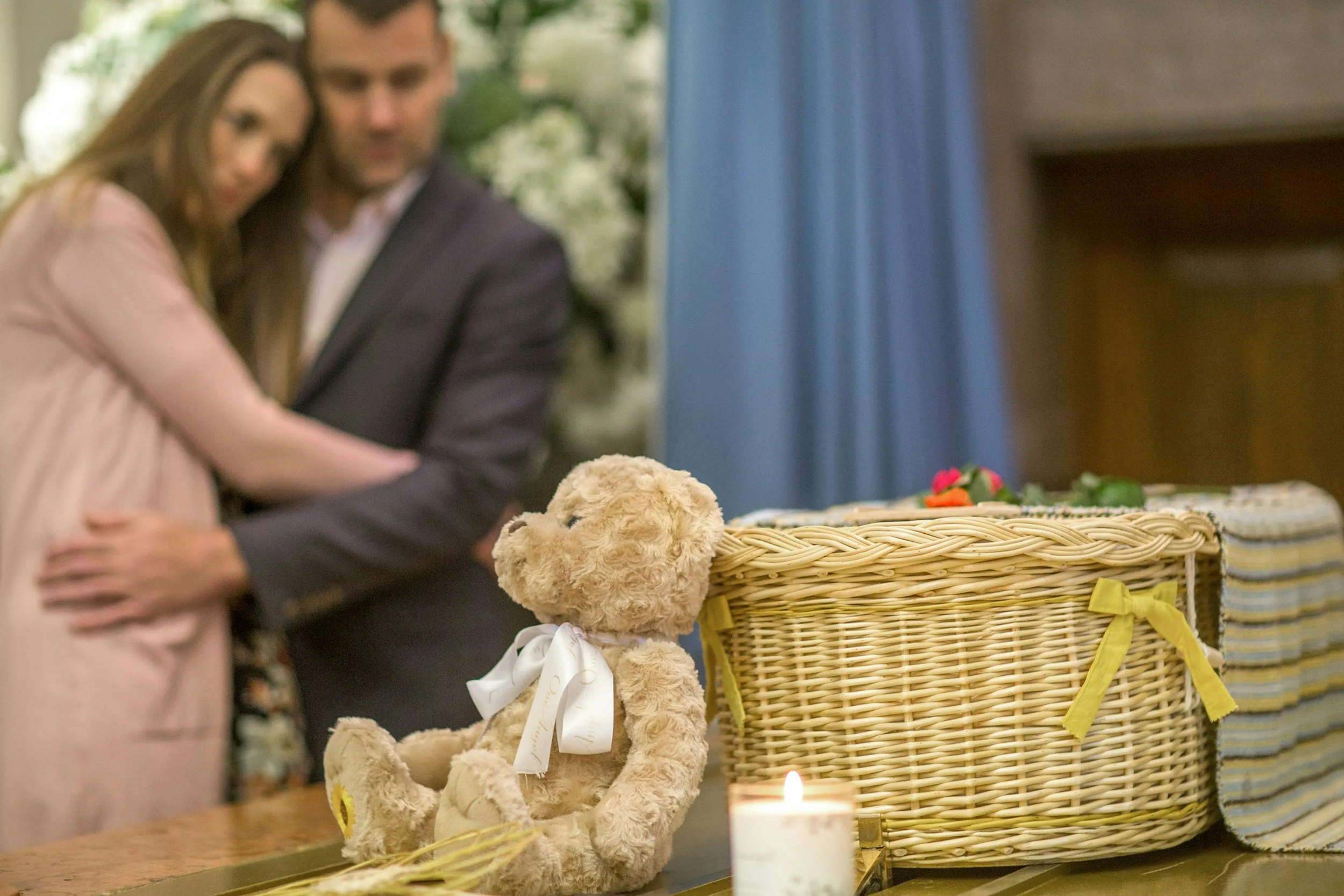
The second belief is:
“I'll just follow the family's lead.”
This one sounds beautiful.
And in many ways, yes, we absolutely want to honor the family's wishes, values, culture, language, and boundaries.
But here is the part we have to understand:
A family in shock may not know how to lead.
They may not know what options exist.
They may not know they can ask for more time.
They may not know they can take photos.
They may not know they can bathe or dress their baby.
They may not know siblings can be included.
They may not know what questions to ask about lactation, autopsy, funeral homes, cremation, certificates, keepsakes, or postpartum recovery.
So if our entire plan is “I'll follow their lead,” we may both stand frozen.
A more helpful belief is:
“I will follow their lead, AND I can gently offer options.”
This matters.
We are not taking over.
We are not pushing.
We are not deciding for them.
We are saying:
“Here are some options other families have found meaningful. You can say yes, no, maybe, or not right now.”
That is informed, compassionate care.

The third belief is:
“Don't bring it up. You might make it worse.”
This one is so common.
People are afraid that saying the baby's name or mentioning the loss will remind the family of what happened.
But bereaved parents did not forget.
They are already thinking about their baby.
They are already carrying the loss.
They are already aware that someone is missing.
What often hurts more is the silence.
The avoided eye contact.
The change in tone.
The way everyone suddenly talks around the most important thing that happened.
The feeling that their baby is too uncomfortable for other people to acknowledge.
A more helpful belief is:
“Bringing up the baby with tenderness does not create the grief. It honors the love.”
You can always be gentle.
You can always ask permission.
You can say:
“I'm thinking of you and remembering [Baby's Name] today. There is no pressure to respond.”
Notice the pattern in these three beliefs.
Time heals.
Follow their lead.
Don't bring it up.
They all sound gentle and loving.
But if we are not careful, each one can permit professionals to pull back.
And to a grieving family, pulling back can feel like abandonment.
Again, this does not mean you are a bad provider.
It means this part of care needs more than a sentence in a workbook.
It needs language.
It needs practice.
It needs options.
It needs a framework.
So here is your tool for today.
Do a “belief update” in your notes app.
Write these three old beliefs:
Time heals.
I'll follow their lead.
Don't bring it up.
Then replace them with these:
Time matters, but support helps families feel less alone.
I will follow their values and gently offer options.
Saying the baby's name with care can honor their love.
Save that note somewhere you can come back to.
Because the way we think about grief shapes the way we show up for it.
And families can feel the difference.
This is the kind of gap the Pregnancy Loss Education Training was created to help close, by giving you the deeper tools this work deserves.
Want to reflect more about what this blog sparked for you? Here is a reflection question to help you get started.
Which belief did you hear, learn, or absorb somewhere along the way?
Time heals?
Follow their lead?
Don't bring it up?
At Evelyn James and Co, we are here to support your own journey through grief support. This blog is just the tip of the iceberg. We’d love to connect, whether it’s through an email here, or through our self-paced training. Reach out. We cannot do this work alone.
